

Jelly watermelon slice with WebGPU soft-body physics
A comparison: one prompt given to Claude Opus 5.5 and GPT-6 Astra for a grabbable jelly watermelon wedge. Opus 5.5 was judged the better result.
Tạo mô hình 3D chi tiết
Chỉ dùng code thì chỉ được các hình khối đơn giản. Wandy 2 biến một tấm ảnh thành mô hình 3D có texture để bạn dùng ngay trong cùng cảnh đó.
Prompt cho Claude Opus 5.5
Create “Melon Jelly” - a polished, interactive 3D watermelon jelly slice that runs directly in the browser using genuine WebGPU and WGSL shaders.
Deliver a single, self-contained HTML file with embedded JavaScript and CSS. This must be an actual interactive 3D simulation, not a static render, video, or 2D imitation.
THE WATERMELON
Create a thick, rounded triangular watermelon wedge with:
Translucent ruby-red jelly flesh.
A pale, slightly translucent layer between the flesh and rind.
A glossy green outer rind with irregular dark-green stripes.

Individually modeled dark seeds embedded in both exposed sides.
Softly rounded corners and an appealing, substantial thickness.
Make it look like an expensive gummy candy photographed in a studio. It should feel juicy, soft, and almost edible. Keep the colors rich without overexposing the highlights.
SOFT-BODY PHYSICS
Use a volumetric soft-body simulation, such as a tetrahedral mesh with XPBD elastic and volume-preservation constraints.
The user must be able to:
Grab the tip, a corner, the flesh, or the rind.
Stretch, bend, lift, and gently twist the slice.

Release it and watch it wobble before gradually settling.
The slice must visibly deform locally, not simply move or scale as one rigid object. Make the rind slightly firmer than the flesh while keeping the whole slice flexible.
Preserve volume reasonably during stretching. Prevent inverted elements, explosive motion, and permanent collapse. Use a fixed simulation timestep and bounded substeps for stability.
After release, the motion should decay naturally - no instant snapping back and no endless oscillation.
Keep seeds attached to the deforming flesh. They must move and rotate with the surface rather than float independently or remain fixed in space.
Include ground contact, gentle friction, and soft bouncing. Avoid visible floor penetration.
RENDERING
Use native WebGPU with WGSL shaders.
Include:
Thickness-dependent light absorption.
Refraction through the jelly.

Fresnel reflections and glossy highlights.
Soft transmitted light through thin edges.
Subtle internal details and a few tiny air bubbles.

Soft contact shadows beneath the slice.
A light, neutral studio background.
The flesh, pale rind, and green skin should have distinct material responses. Avoid making everything look like clear glass or opaque plastic.
Keep the slice large and easy to inspect, with a three-quarter camera angle that reveals the flesh, seeds, and thickness.
INTERFACE
Use a minimal editorial layout with generous whitespace, thin borders, restrained controls, and no decorative UI gradients.
Top left:
“MATERIAL STUDIES / NO. 009”
A large italic serif heading split across two lines: “Melon” and “Jelly.”
Small caption:
“A slice of summer.”
“A little wobble.”
“Too soft to share.”
Top right:
A small status indicator showing “WEBGPU · LIVE” when the renderer is running.

Right-side panel:
“THE SPECIMEN”
Three coordinated watermelon-inspired color presets.
Firmness slider with its current value.
Internal damping slider with its current value.
“Give it a nudge” and “Reset” buttons.
“¼ speed” and “Show mesh” checkboxes.

Pause / Resume button.
Bottom left:
A short hint explaining that the slice can be grabbed and stretched.
Live mass, relative volume, and kinetic-energy readouts derived from the simulation. Clearly describe illustrative units or approximate values where appropriate.
Bottom right:

A collapsible “Inside the experiment” section briefly explaining the physics and rendering.
BEHAVIOR AND PERFORMANCE
Support both mouse and touch input. Use pointer capture so dragging remains reliable when the pointer leaves the object.
Make the layout work on desktop and mobile without controls covering the slice.
Reuse buffers and avoid rebuilding geometry or compiling shaders during dragging. Keep interaction smooth and responsive.
Respect reduced-motion preferences. If WebGPU is unavailable, display a clear explanation instead of silently substituting a fake renderer.
VALIDATION
Test dragging from several locations, strong stretches, repeated releases, ground collisions, all sliders, presets, pause, reset, and slow motion.
Check that the model returns to a stable resting shape, seeds stay attached, the mesh remains intact, and there are no rendering errors.
Prioritize the quality of the jelly response and lighting. The result should be something people want to keep grabbing and playing with.
Cách dùng prompt này
Paste the prompt into Claude Opus 5.5 (or GPT-6 Astra to compare) and ask for one self-contained HTML file.
Swap the watermelon for another soft object, and change the presets, firmness range and interface wording.
Open the file in a WebGPU browser, drag and release the slice, then refine lighting and wobble over a few rounds.
Từ Wandy3D
 Từ Wandy3D
Cần một mô hình 3D thật trong cảnh của bạn?
Agent của bạn dựng cảnh bằng các khối cơ bản. API Wandy3D biến ảnh hoặc prompt thành tệp GLB có texture chỉ trong vài phút — trả từ số dư nạp trước, không cần đăng ký gói.
- Wandy 20,18 US$ mỗi mô hình
- Wandy 10,09 US$ mỗi mô hình
Số dư không bao giờ hết hạn · tác vụ lỗi được hoàn tiền · mô hình tạo qua API thuộc về bạn và tải xuống được ở mọi định dạng.
curl -s -X POST https://api.wandy3d.com/generate/cloud/ultra \ -H "Authorization: Bearer $WANDY3D_API_KEY" -F "file=@photo.jpg"# → {"task_id": "…"} — poll until "status" is "done":curl -s https://api.wandy3d.com/task/$TASK_ID/status \ -H "Authorization: Bearer $WANDY3D_API_KEY"# → {"model_id": "…"} — then GET /model/$MODEL_ID/export?format=glbBài đăng gốcBạn là tác giả? Yêu cầu chúng tôi sửa hoặc gỡ trang này
Prompt tương tự
Xem tất cả prompt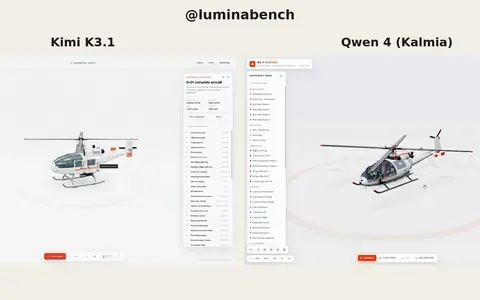 Kimi K3.1
Interactive 3D helicopter with takeoff, assembly and exploded views
Lumina
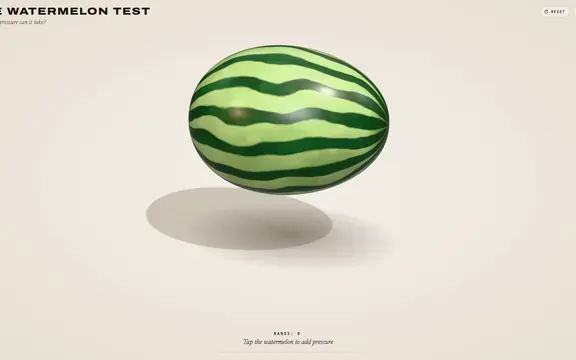 Claude Opus 5.5
Rubber band watermelon test: a squeezable, bursting 3D browser toy
林悦己Cheer
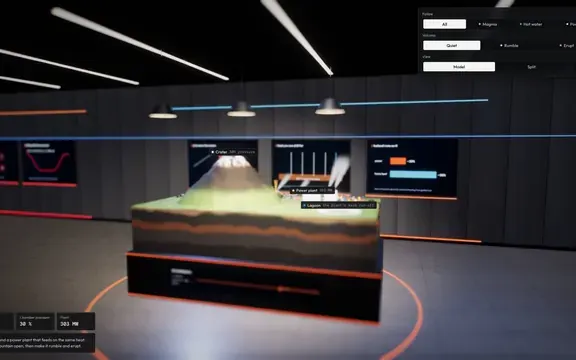 Claude Opus 5.5
Interactive 3D volcano cutaway simulation with magma chamber
Konstantin Saifoulline
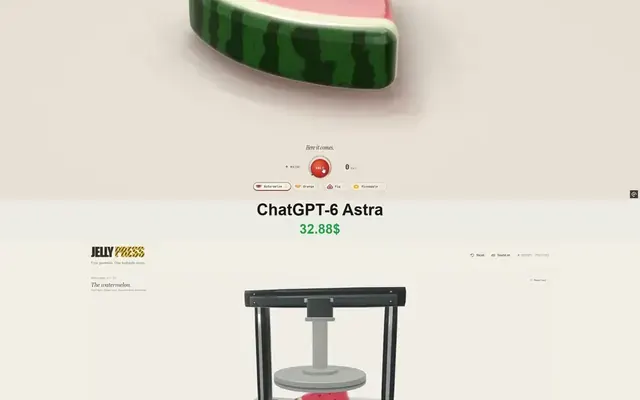 Claude Opus 5.5
WebGPU jelly press toy: gummy fruit squashed and burst by a hydraulic press
Vib3Coded
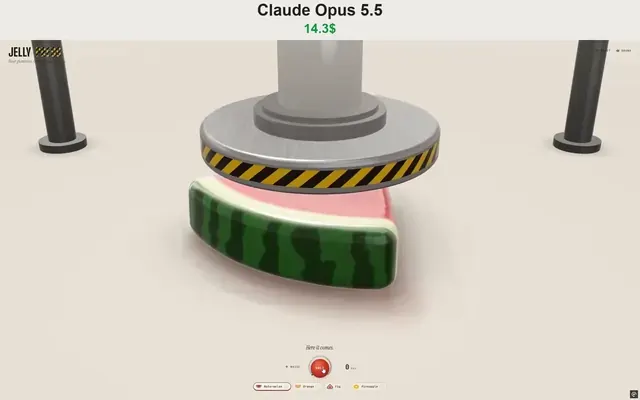 Claude Opus 5.5
Single-file WebGPU jelly press toy with soft-body fruit gummies
Vib3Coded
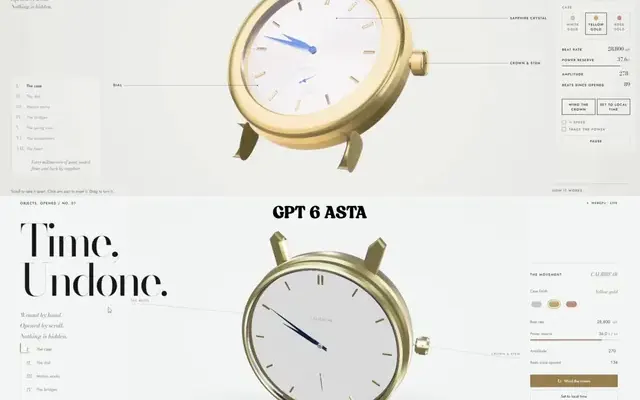 Claude Opus 5.5
Scroll-driven exploding mechanical watch in raw WebGPU, single HTML file
Paruchh