

Steerable Viking longship voyage through a Nordic fjord in Three.js
GPT-6 Astra produced a single-file fjord journey: a rowed longship on reflective shader water, with oar splashes, waterfalls and three lighting moods.
Tạo mô hình 3D chi tiết
Chỉ dùng code thì chỉ được các hình khối đơn giản. Wandy 2 biến một tấm ảnh thành mô hình 3D có texture để bạn dùng ngay trong cùng cảnh đó.
Prompt cho GPT-6 Astra
Create “Northbound” - a beautiful, interactive 3D journey through a Nordic fjord aboard a detailed Viking longship.

Build a genuine real-time scene using Three.js and WebGL, delivered as a single standalone HTML file. This must be an explorable browser experience, not a pre-rendered video or a flat illustration.

VISUAL DIRECTION

Aim for a polished, cinematic environment with realistic materials, natural proportions, and restrained colors. Avoid a cartoon or low-poly appearance.

A wooden longship travels through deep green-blue water between towering cliffs, dense forests, waterfalls, and small Nordic settlements. Use atmospheric perspective, subtle mist, soft shadows, and convincing depth. Compose beautiful views throughout the journey, not just from the initial camera position.

THE LONGSHIP

Construct a detailed, watertight hull with overlapping wooden planks, visible grain, ribs, benches, and a continuous interior.
Add a carved dragon prow, striped cloth sail, mast, ropes, shields, supplies, and warm lanterns.
Include proportionate Viking passengers and rowers with layered clothing, believable seated poses, and hands positioned near their oars.
Keep every component physically connected. No floating passengers, intersecting accessories, or visible gaps through the hull.
Animate subtle buoyancy, pitch, and roll. The sail should respond gently to the wind.

WATER AND ROWING

Make the water a central visual feature.

Use a custom shader with planar reflections, refraction, Fresnel highlights, depth-dependent absorption, visible shallow areas, and layered surface ripples. Reflections must respond correctly to the moving camera and changing lighting.

Create a believable wake behind the ship.

Animate a complete rowing cycle: blades enter the water, pull backward, lift out, and return above the surface. Coordinate this with the rowers’ movement.

Generate ripples, foam, and small droplets at the actual blade-water contact points. Trails must remain in world space and gradually dissipate. Avoid effects appearing while the blades are in the air.

ENVIRONMENT AND MATERIALS

Use detailed terrain, irregular rock formations, natural tree silhouettes, branching trunks, and individual leaf or needle clusters.

Use PBR materials with normal and roughness maps for wood, stone, and ground. You may embed appropriately licensed textures; include attribution where required.

Ensure the underwater terrain continues beneath the surface. No bright seams, shoreline gaps, floating vegetation, or trees obstructing the navigable route.

CONTROLS

A/D or arrow keys: steer left and right.
W/S: adjust speed.
Mouse drag: look around.
Provide follow, orbit, and cinematic camera modes.
Include an optional automatic journey mode.
Add pause, reset, fullscreen, and hide-interface controls.
Support touch steering and speed controls on mobile.
Prevent the ship from passing through land and rocks.

ATMOSPHERE AND INTERFACE

Provide three smoothly transitioning lighting presets: Morning, Overcast, and Moonlight.

Add optional ambient water, wind, birds, and rowing sounds. Audio must begin only after user interaction.

Design a minimal editorial interface: “Northbound.” in an elegant serif typeface, subtle chapter labels, and a compact translucent control bar. Keep the scenery unobstructed.

PERFORMANCE AND DELIVERY

Use instancing, sensible geometry budgets, distance-based detail, and appropriately sized reflection targets. Adapt rendering quality to the device instead of promising a fixed frame rate.

Deliver one HTML file with scripts and required assets embedded so it can open directly in a modern browser.

Test steering, camera modes, lighting transitions, and rowing. Inspect the ship from multiple angles and check the shoreline from low viewpoints. Fix geometry intersections, reflection artifacts, excessive glare, and console errors before considering the scene finished.

Prioritize convincing water, a beautifully constructed longship, and a cohesive environment over adding more objects.
Cách dùng prompt này
Paste the prompt into GPT-6 Astra in your coding tool and ask for one standalone HTML file.
Swap the ship, region or lighting presets, or trim the controls list to cut cost and revision rounds.
Open the file, steer with A/D, try the camera modes, then ask for fixes to water, shoreline or collisions.
Từ Wandy3D
 Từ Wandy3D
Cần một mô hình 3D thật trong cảnh của bạn?
Agent của bạn dựng cảnh bằng các khối cơ bản. API Wandy3D biến ảnh hoặc prompt thành tệp GLB có texture chỉ trong vài phút — trả từ số dư nạp trước, không cần đăng ký gói.
- Wandy 20,18 US$ mỗi mô hình
- Wandy 10,09 US$ mỗi mô hình
Số dư không bao giờ hết hạn · tác vụ lỗi được hoàn tiền · mô hình tạo qua API thuộc về bạn và tải xuống được ở mọi định dạng.
curl -s -X POST https://api.wandy3d.com/generate/cloud/ultra \ -H "Authorization: Bearer $WANDY3D_API_KEY" -F "file=@photo.jpg"# → {"task_id": "…"} — poll until "status" is "done":curl -s https://api.wandy3d.com/task/$TASK_ID/status \ -H "Authorization: Bearer $WANDY3D_API_KEY"# → {"model_id": "…"} — then GET /model/$MODEL_ID/export?format=glbBài đăng gốcBạn là tác giả? Yêu cầu chúng tôi sửa hoặc gỡ trang này
Prompt tương tự
Xem tất cả prompt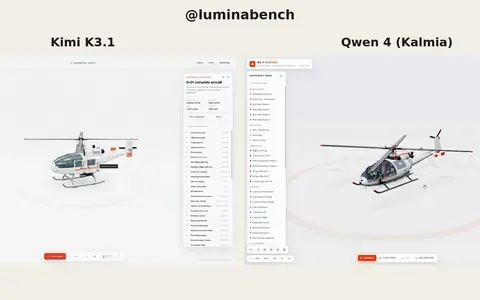 Kimi K3.1
Interactive 3D helicopter with takeoff, assembly and exploded views
Lumina
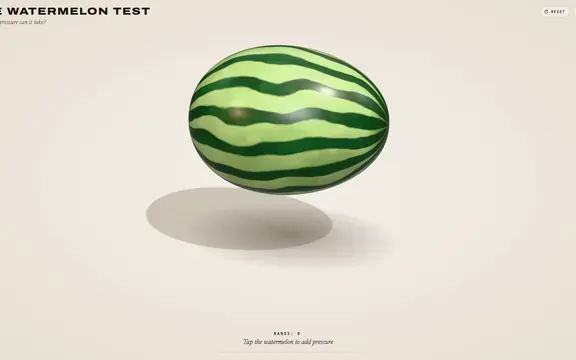 Claude Opus 5.5
Rubber band watermelon test: a squeezable, bursting 3D browser toy
林悦己Cheer
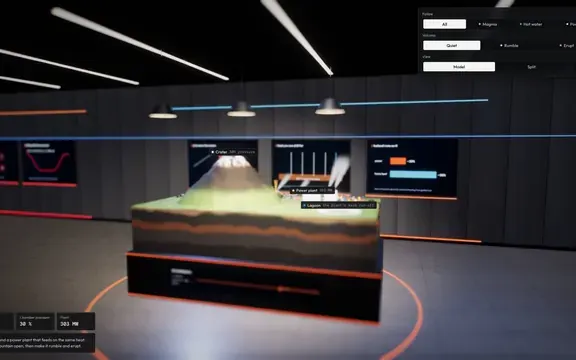 Claude Opus 5.5
Interactive 3D volcano cutaway simulation with magma chamber
Konstantin Saifoulline
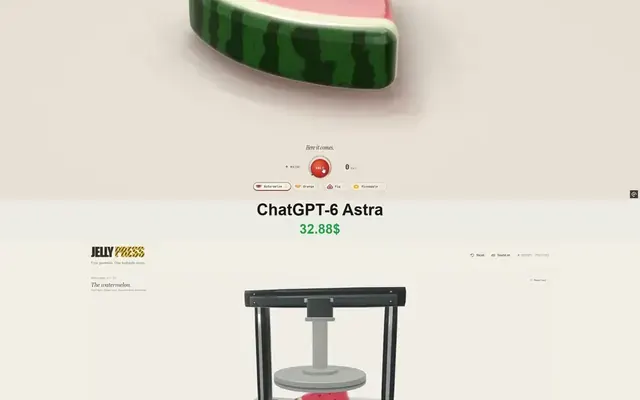 Claude Opus 5.5
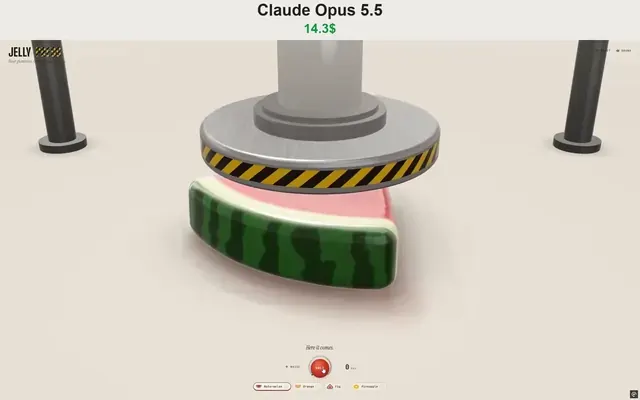
WebGPU jelly press toy: gummy fruit squashed and burst by a hydraulic press
Vib3Coded
 Claude Opus 5.5
Single-file WebGPU jelly press toy with soft-body fruit gummies
Vib3Coded
 Claude Opus 5.5
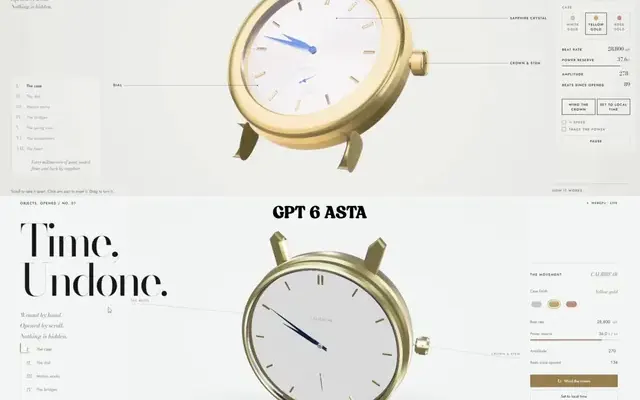
Scroll-driven exploding mechanical watch in raw WebGPU, single HTML file
Paruchh