

Evolving 3D ocean ecosystem in one HTML file with raw WebGL
Astra wrote a library-free WebGL and GLSL simulation in which glowing cells divide, mutate, bond into colonies and swim as organisms.
Create detailed 3D models
Code alone gets you simple shapes. Wandy 2 turns one photo into a textured 3D model you can use in the same scene.
Build brief by Wandy3D
The author didn't share a prompt, so we wrote down how to recreate this build.
Build a single self-contained HTML file with raw WebGL and GLSL, no libraries, that simulates an evolving 3D ocean ecosystem. Start from a primordial sea with thermal vents on a dark seabed, then let translucent bioluminescent cells appear, drift, divide and mutate in visible ways. Add predation, energy economics and natural selection, and let cells bond into multicellular colonies that grow appendages and swim as organisms. Write the full pipeline yourself: vertex and fragment shaders, procedural geometry, lighting and a volumetric fluid look. Use a slowly drifting camera like a submersible, a deep teal and green palette with glowing accents, and a minimal HUD showing elapsed time, population, species and most complex organism, plus short stage captions. Give only the vision, not implementation details. Done means life emerges unaided and runs without errors.
How to use this prompt
Paste the build brief into GPT-6 Astra and ask for one self-contained HTML file with raw WebGL.
Change the habitat, palette or creature traits, and keep the instructions about the vision rather than data structures.
Open the file, watch the stages unfold, then ask for more mutation, predators or a different camera drift.
Original postAre you the author? Ask us to edit or remove this page
More prompts like this
Browse all prompts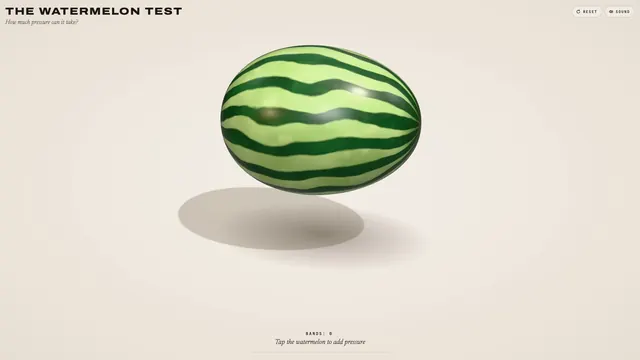 Claude Opus 5.5
Rubber band watermelon test: a squeezable, bursting 3D browser toy
林悦己Cheer
 Claude Opus 5.5
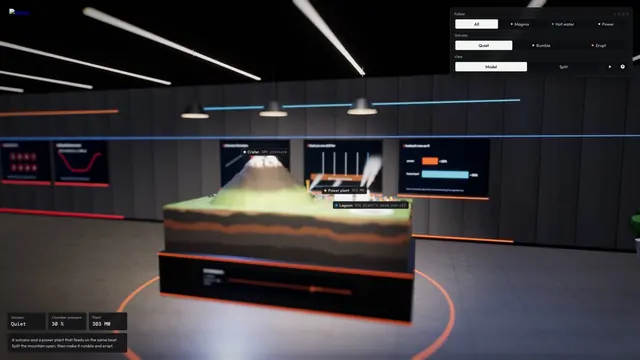
Interactive 3D volcano cutaway simulation with magma chamber
Konstantin Saifoulline
 Claude Opus 5.5
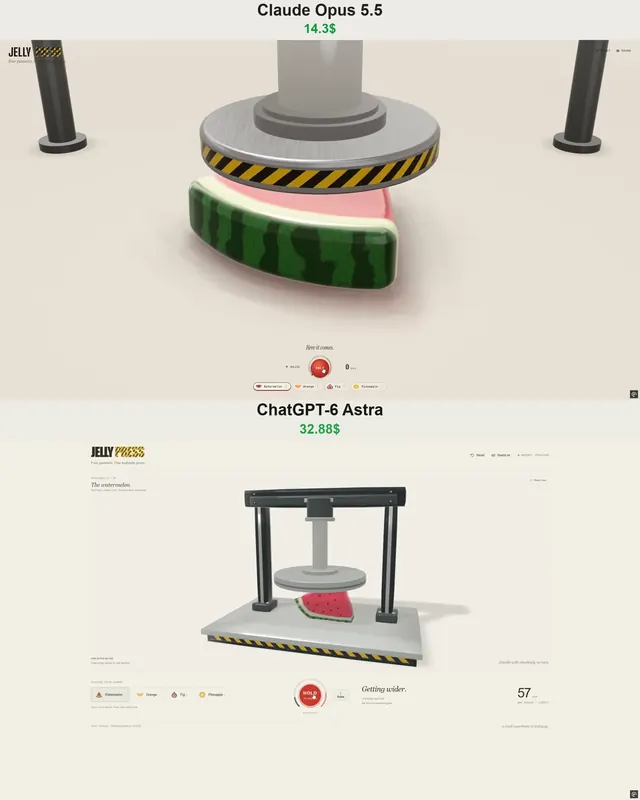
WebGPU jelly press toy: gummy fruit squashed and burst by a hydraulic press
Vib3Coded
 Claude Opus 5.5
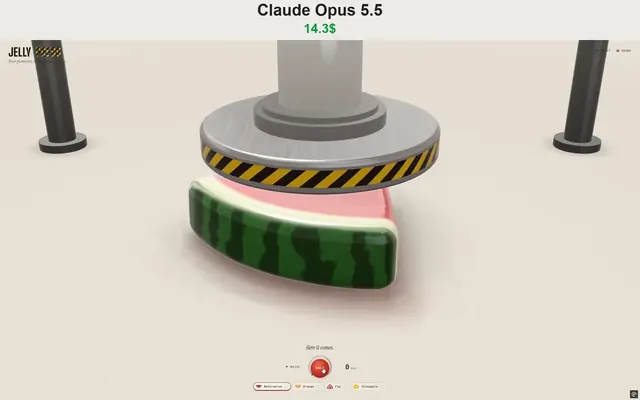
Single-file WebGPU jelly press toy with soft-body fruit gummies
Vib3Coded
 Claude Opus 5.5
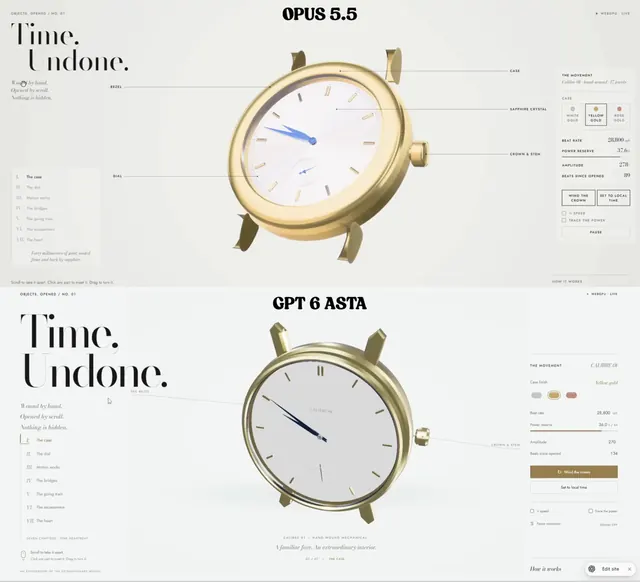
Scroll-driven exploding mechanical watch in raw WebGPU, single HTML file
Paruchh
 Claude Opus 5.5
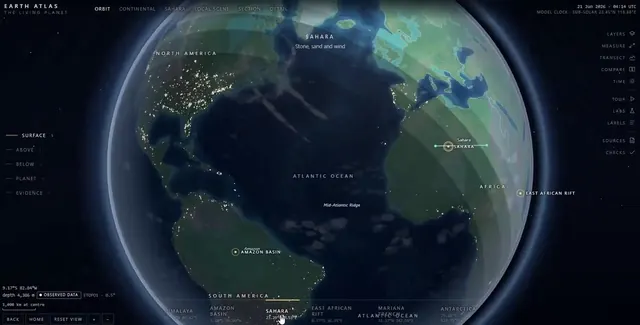
Single-file interactive SVG Earth atlas with globe, expeditions and cutaway
Gadgetify