

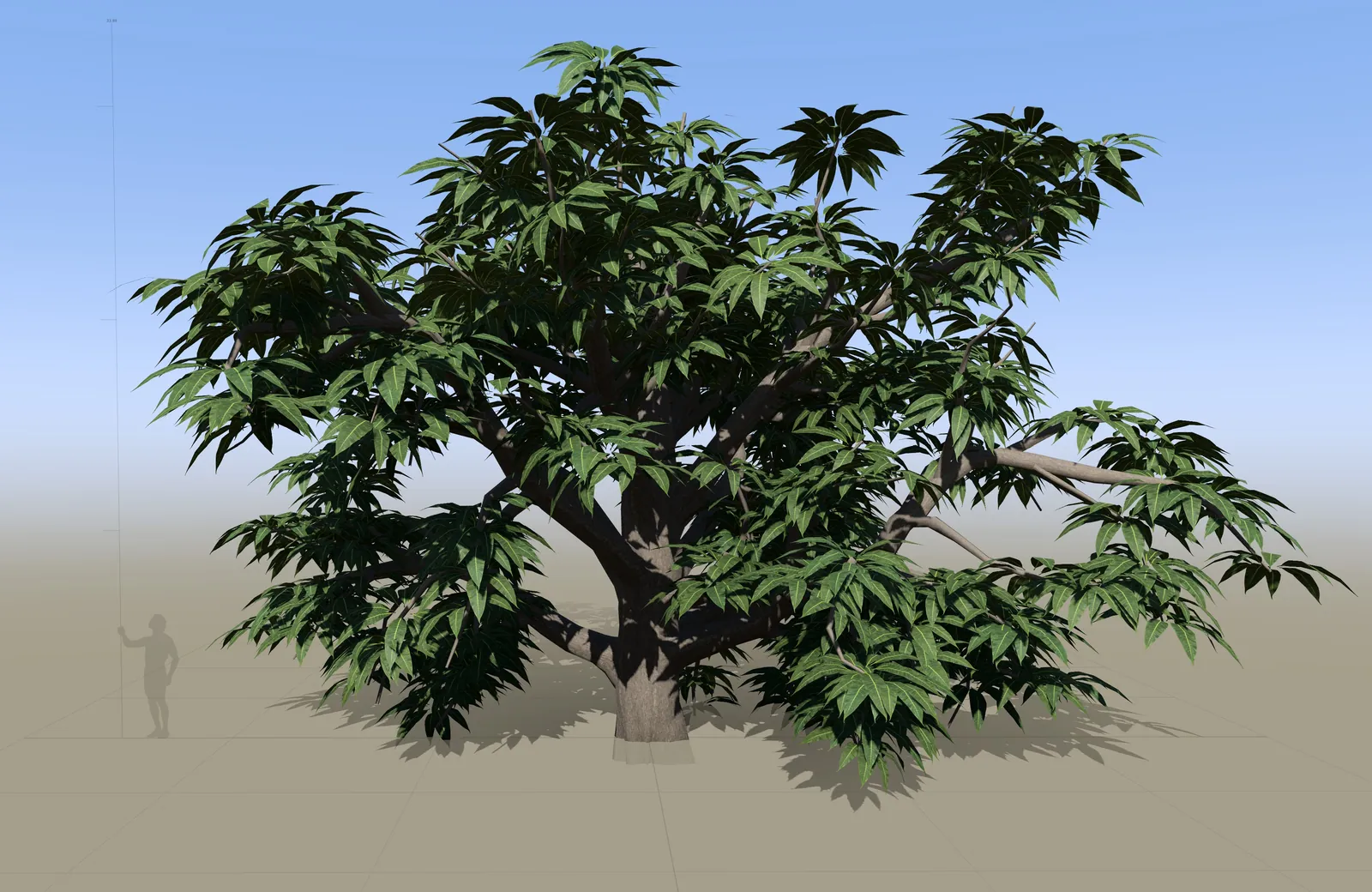
Indian mango tree with custom leaf and bark materials in SpeedTree
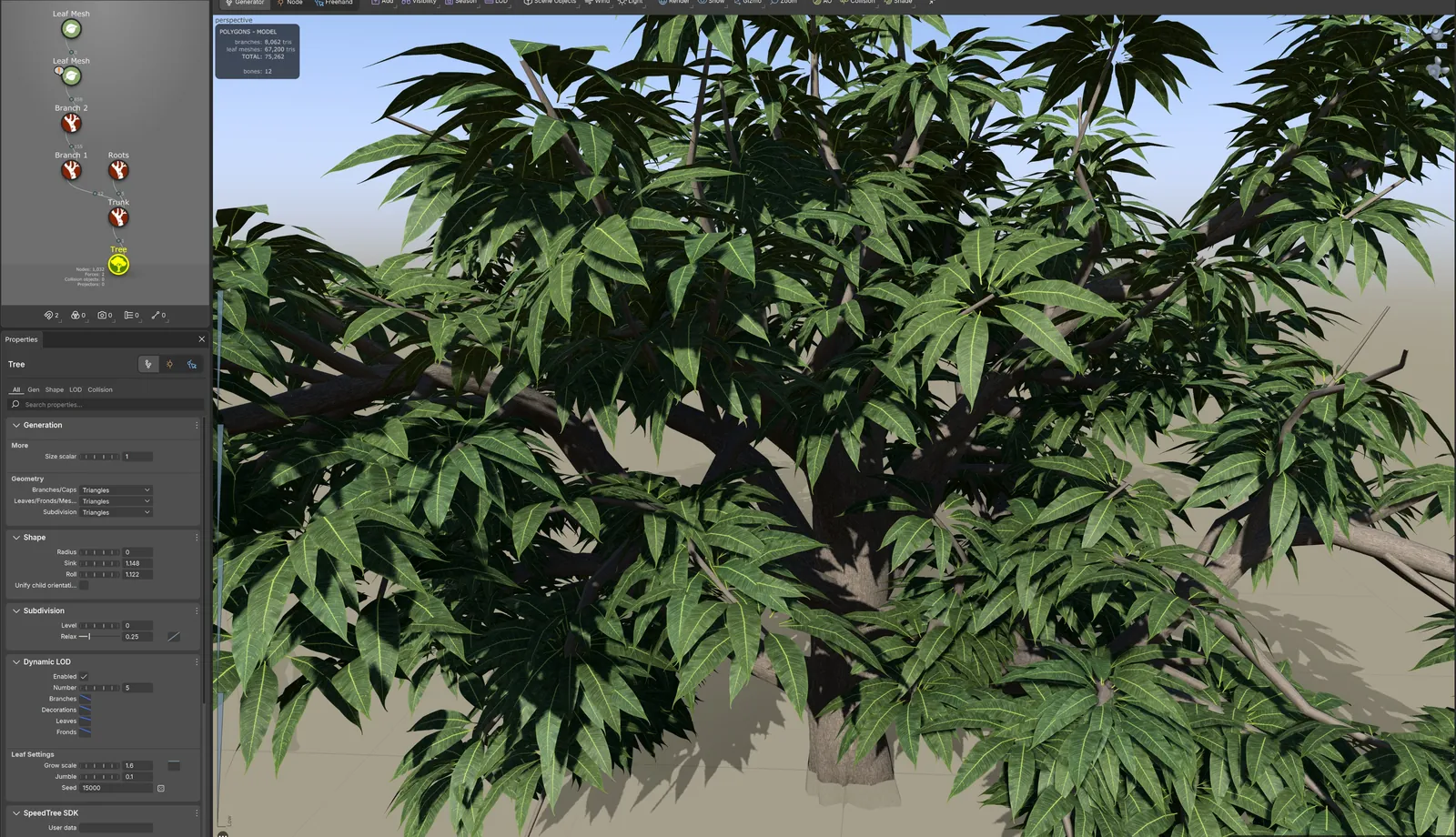
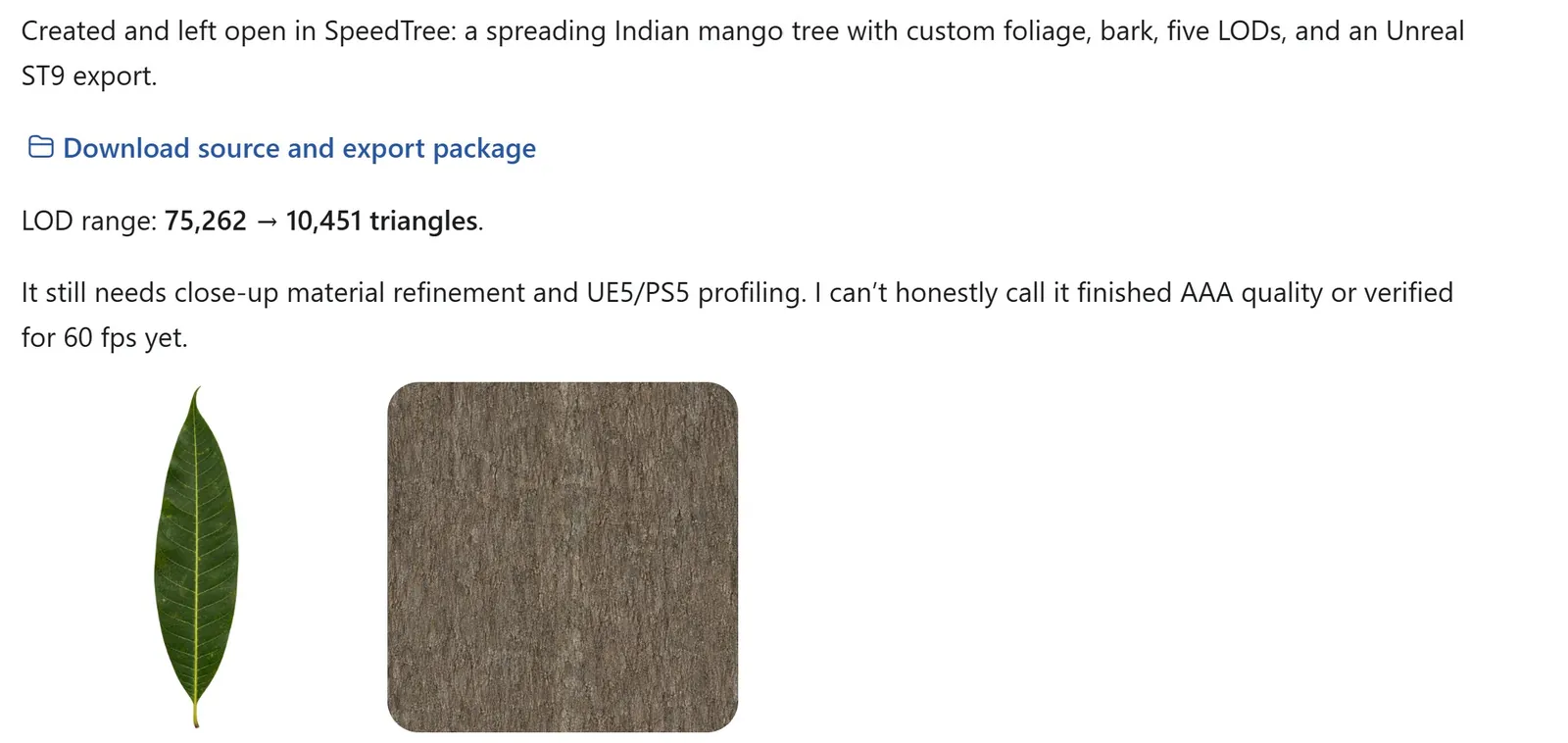
GPT-6 Astra drove SpeedTree to make a spreading mango tree with its own foliage and bark textures, five LODs and an Unreal export.
Claude Code + Three.js (code only)Wandy 2
Create detailed 3D models
Code alone gets you simple shapes. Wandy 2 turns one photo into a textured 3D model you can use in the same scene.
Build brief by Wandy3D
The author didn't share a prompt, so we wrote down how to recreate this build.
Build a game-ready Indian mango tree in SpeedTree, aimed at a high-end Unreal Engine project running at 60 fps. Create a wide, spreading canopy with thick forked branches and a short, sturdy trunk. Generate your own materials: a glossy, elongated dark-green leaf texture with a visible midrib, and a brown fissured bark texture that tiles cleanly. Set up a chain of five levels of detail, running from a dense close-up version of roughly seventy-five thousand triangles down to a light distant version of around ten thousand. Export the tree in a format Unreal can import, together with the source file and textures. Preview it against a sky backdrop with a human-scale silhouette for size reference. Done means the tree reads as a believable mango at every distance, the LODs swap without obvious popping, and you note honestly which parts, such as bark detail, still need refinement and profiling.
How to use this prompt
Give the build brief to GPT-6 Astra with a SpeedTree session open, and name your target engine and frame rate.
Swap the species, canopy shape, LOD count or triangle budget to suit your own game vegetation.
Review the tree in close-up, then ask for better bark or leaf textures and re-export for Unreal.
Original postAre you the author? Ask us to edit or remove this page
More prompts like this
Browse all prompts Claude Sonnet 5.5
Macro-style 3D human eye in Three.js with lashes and a lid that follows the iris
Simonas
 Grok 4.7
3D-printable J-hook for a load test, written as OpenSCAD
Wësche
 Claude Opus 5.5
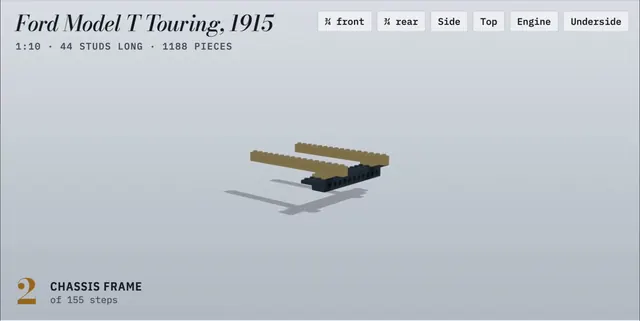
LEGO Ford Model T with a 155-step animated build manual
Alex Lieberman
 GPT-6 Astra
Fluffy guinea pig modeled in Blender from a single short request
かよこ
 Claude Fable 5.1
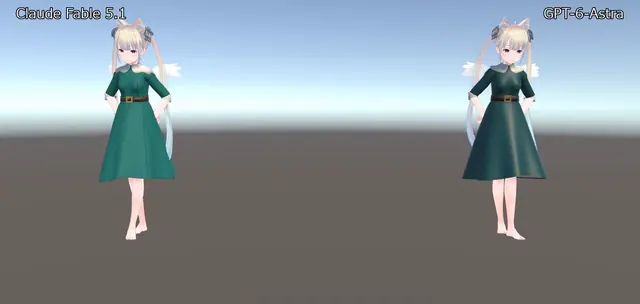
VRChat avatar dress modeled in Blender, shown dancing in Unity
のわ〜る👼🍆🐄
 Claude Opus 5.5
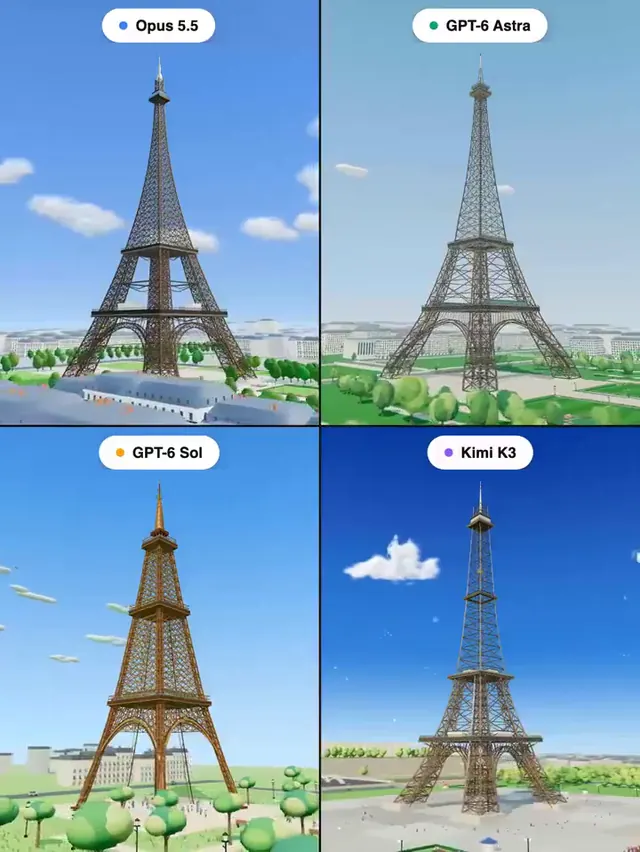
Eiffel Tower in Three.js: four models, one prompt
Pascual ⚡